Rising Warnings and Underlying Economic Risks
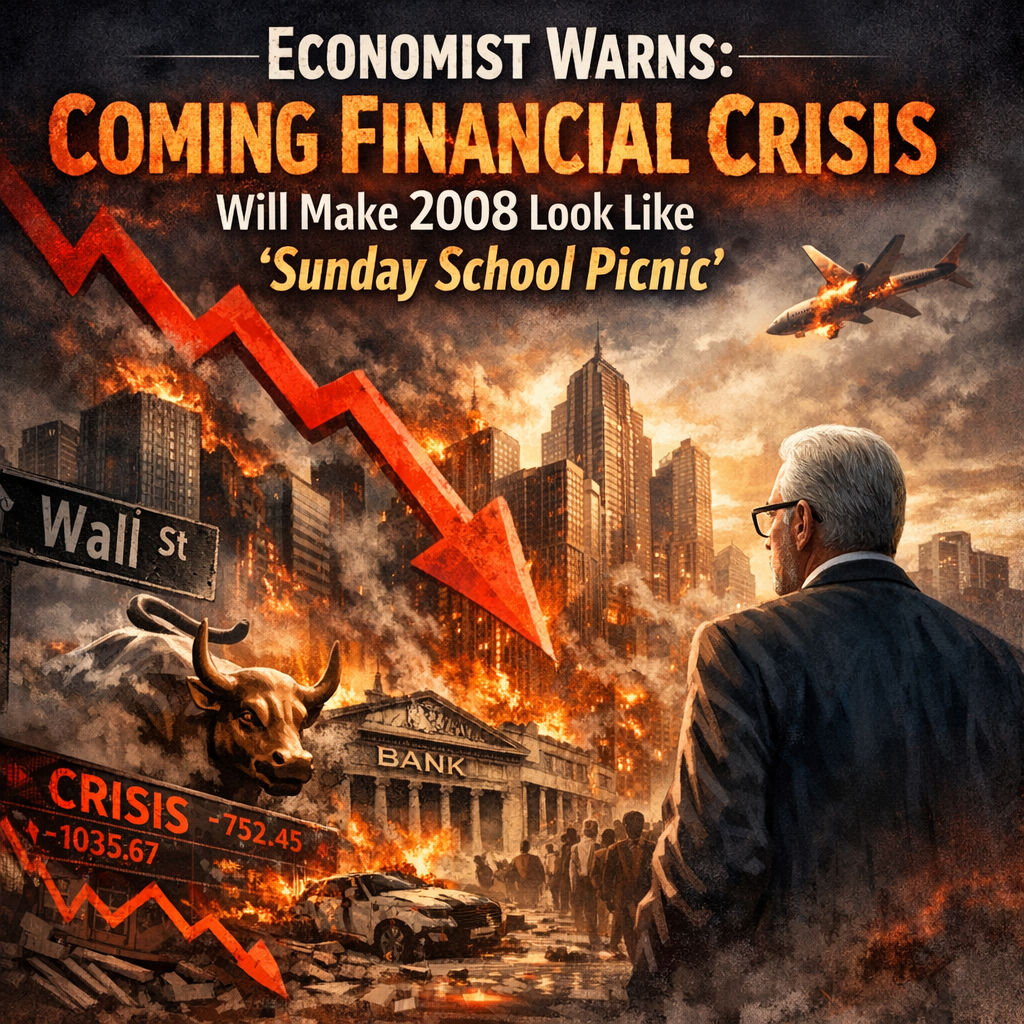
When a seasoned economist warns that the next financial crisis could make 2008 look like a “Sunday school picnic,” it’s hard not to pay attention. The 2008 global financial crisis wiped out trillions in wealth, triggered mass unemployment, and reshaped economies worldwide—so what could possibly be worse? More importantly, is this just another doom prediction, or are there real warning signs we should understand?
In this article, we’ll unpack what’s behind these alarming claims, explore the structural risks in today’s global economy, examine the role of debt, inequality, and policy decisions, and—most importantly—discuss what individuals can realistically do to prepare.
Understanding these dynamics isn’t just for economists or policymakers. It affects your job security, savings, housing costs, and future opportunities.
Predictions of financial collapse aren’t new. Some analysts have been forecasting economic downturns for years, leading critics to compare them to “a broken clock”—eventually right, but often early. Still, repeated warnings don’t automatically mean they’re wrong; they may reflect persistent structural issues that haven’t been resolved.
The current concern centers around a combination of factors:
Soaring global debt levels, both public and private.
Asset prices (stocks, real estate, and commodities) that appear disconnected from underlying economic fundamentals.
Heavy reliance on monetary policies like low interest rates and money creation.
Geopolitical instability and rising political polarization.
For example, global debt has surpassed $300 trillion according to the Institute of International Finance. That’s significantly higher than levels seen before the 2008 crisis. While debt itself isn’t inherently bad, excessive debt can become dangerous if economic growth slows or interest rates rise.
An effective visual here would be a line chart showing global debt growth from 2000 to today, highlighting the steep increase after 2008.
Debt Pressures and Policy Trade-Offs
At the heart of many crisis warnings is a simple idea: you can’t indefinitely spend more than you earn without consequences.
Governments often run deficits to stimulate growth, fund social programs, or respond to crises. However, when debt accumulates faster than economic output, policymakers face difficult choices:
Raise taxes
Cut spending
Inflate the currency to reduce the real value of debt
Each option carries trade-offs. Cutting spending can slow economic growth and provoke public backlash. Raising taxes can be politically unpopular. Inflation, while less visible, erodes purchasing power and disproportionately affects lower-income households.
Critics argue that many governments have avoided making tough fiscal decisions, instead relying on short-term fixes. This has led to a growing concern that future adjustments may be more abrupt and painful.
A useful infographic here could illustrate how government debt-to-GDP ratios have evolved across major economies like the U.S., Japan, and EU countries.
Inequality, Asset Inflation, and Market Imbalances
Another key issue raised in discussions around financial instability is wealth concentration. Over recent decades, wealth has increasingly accumulated among a small percentage of individuals and corporations.
This concentration can have several economic effects:
Increased investment in assets like real estate, stocks, and art, driving prices higher.
Reduced affordability for average households, particularly in housing markets.
Greater market volatility due to large-scale capital movements.
For instance, housing prices in many major cities have surged far beyond wage growth, making homeownership increasingly inaccessible. Some analysts argue that excess capital at the top is fueling asset bubbles, as investors seek returns in limited opportunities.
At the same time, corporate practices like stock buybacks can inflate share prices without necessarily improving long-term productivity or innovation.
A chart comparing wage growth versus housing prices over time would be especially effective in illustrating this imbalance.
Political Constraints and Delayed Reforms
Economic policy doesn’t exist in a vacuum—it’s shaped by politics, public opinion, and media narratives.
One recurring theme in public discourse is the difficulty of implementing long-term solutions in a polarized environment. Structural reforms—such as tax changes, spending cuts, or regulatory shifts—often face resistance because they involve short-term pain.
Additionally, misinformation and partisan messaging can cloud public understanding of economic realities. When voters are divided or misinformed, it becomes harder to build consensus around necessary reforms.
This dynamic can lead to a cycle where problems are acknowledged but not addressed, increasing the risk of more severe consequences later.
An effective visual here could be a flowchart showing how political polarization can delay economic reforms, leading to larger crises.
Historical Perspective and Practical Preparation
History suggests that financial crises often result from a combination of factors rather than a single cause. The 2008 crisis, for example, was driven by excessive risk-taking in the housing market, weak regulation, and complex financial instruments.
Today’s risks are different but share some similarities:
High leverage (debt)
Asset bubbles
Overconfidence in markets
Delayed policy responses
However, it’s important to avoid fatalism. Economies are dynamic, and outcomes depend on how governments, businesses, and individuals respond to emerging challenges.
Some economists argue that while risks are elevated, a crisis on the scale described is not guaranteed. Others believe that the longer imbalances persist, the more severe the eventual correction could be.
While you can’t control global economic trends, you can take steps to improve your financial resilience:
Diversify your assets. Avoid putting all your money into a single investment or sector.
Build an emergency fund covering at least 3–6 months of expenses.
Reduce high-interest debt where possible, especially credit cards.
Focus on skills and adaptability to maintain job security in changing markets.
Stay informed, but avoid reacting emotionally to headlines or predictions.
A simple checklist or table summarizing these steps could help readers implement them more easily.
Warnings of an impending financial crisis shouldn’t be dismissed outright—but they also shouldn’t trigger panic. The global economy does face significant challenges, including rising debt, inequality, and political constraints. Whether these issues lead to a crisis worse than 2008 depends largely on how they are managed in the coming years.
What’s clear is that economic stability isn’t guaranteed. Understanding the risks—and preparing thoughtfully—puts you in a far stronger position than ignoring them or assuming everything will work itself out.
Rather than focusing on worst-case scenarios, the most productive approach is to stay informed, remain adaptable, and make sound financial decisions that hold up under a range of possible futures.
International Monetary Fund (IMF) reports on global financial stability
World Bank data on global debt and economic indicators
Institute of International Finance (IIF) Global Debt Monitor
Books such as “This Time Is Different” by Carmen Reinhart and Kenneth Rogoff
Reputable financial news sources like The Economist, Financial Times, and Bloomberg