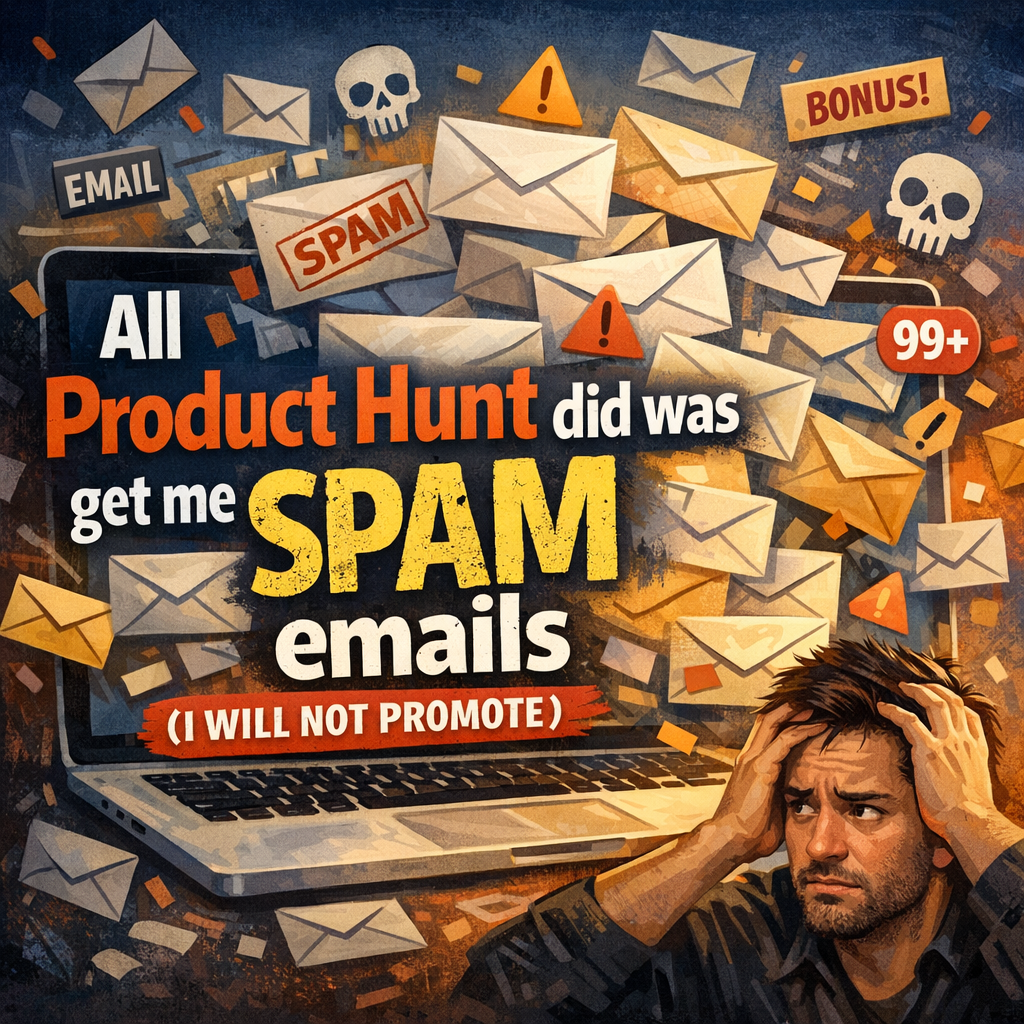
The Reality of a Casual Product Hunt Launch
Launching on Product Hunt feels like a rite of passage for many founders. You imagine a spike in traffic, a flood of early adopters, and maybe even a few investors taking notice. That’s the dream. The reality, as I learned the hard way, can be very different—especially if you treat it casually.
I went into my Product Hunt launch assuming it would be a low-effort, low-impact experiment. I ignored the common advice about preparation, picked a random day, and hit “launch.” The result? Zero upvotes, zero comments, and a quiet realization that I had completely misunderstood how the platform works.
This article breaks down what went wrong, what actually matters in a Product Hunt launch, and what others have experienced when they did things “right.” If you’re considering launching there, this will help you avoid wasting your shot.
Preparation and Visibility Are Not Optional
One of the biggest misconceptions about Product Hunt is that it’s a discovery engine that rewards good products automatically. In reality, it’s closer to a coordinated marketing event.
I made the mistake of ignoring all the advice that said preparation is everything. That meant no audience warm-up, no outreach, no launch-day coordination—just a product page floating in a sea of other launches.
And that sea is massive.
I picked a random Tuesday, assuming I’d be competing with maybe a couple dozen products. Instead, there were over 1,000 launches that day. Visibility wasn’t just low—it was nonexistent.
Without preparation, your product doesn’t “get discovered.” It gets buried.
Contrast that with teams who treat Product Hunt like a campaign. Some spend weeks preparing assets, building anticipation, and lining up support. One founder shared that their team of five spent two weeks and around $20,000 preparing for a launch. They reached first place and generated thousands of signups.
That sounds impressive—until you hear the rest of the story: they made $0.
Preparation increases visibility, but visibility alone doesn’t guarantee meaningful results.
Momentum, Not Merit, Drives Engagement
I assumed that if my product was decent, people browsing Product Hunt would naturally check it out, upvote it, and maybe leave a comment. That didn’t happen.
Not even once.
This highlights an uncomfortable truth: Product Hunt is not a passive discovery platform. It’s heavily influenced by momentum. Products that already have engagement get more visibility, which leads to more engagement—a feedback loop.
If you don’t bring your own initial traction, it’s very hard to get any.
Even founders who do everything “right” often report underwhelming results. One team coordinated their network, secured a top-three product ranking, and generated around 400 signups. Only five of those converted into real users.
That’s a conversion rate that would raise concerns in almost any other acquisition channel.
This suggests that many Product Hunt users are curious—but not necessarily your target customers. They browse, they upvote, they sign up to try things, but they don’t always stick around.
What Product Hunt Is Actually Good For
So if it’s not a reliable growth channel, what is Product Hunt good for?
The answer is more nuanced than “nothing.”
Some founders report that their Product Hunt page continues to rank well on Google and drive a steady trickle of organic traffic over time. In that sense, it functions more like a long-term landing page than a one-day launch event.
Others see it as a credibility signal—a badge that shows you’ve put your product out into the world. While this may have some value in investor conversations, it’s rarely a game-changer on its own.
And then there’s the less glamorous outcome: spam.
After launching, I started receiving daily emails from agencies offering SEO, PR, and growth services. If nothing else, Product Hunt is very effective at putting you on the radar of people trying to sell to startups.
That might be useful in some contexts, but it’s probably not what you’re aiming for.
Audience Mismatch and Smarter Alternatives
One of the most insightful critiques of Product Hunt is that it’s a platform full of builders, not buyers.
If you’re building tools for founders, developers, or tech enthusiasts, you might find some alignment. But even then, you’re competing in a crowded space where everyone is trying to promote something.
If your product targets a different audience entirely, the mismatch becomes even more obvious.
It’s similar to indie game developers promoting their games primarily in communities filled with other developers. The audience understands the work—but they’re not the ones who will buy.
This doesn’t make Product Hunt useless. It just means you need to be clear about what you’re trying to achieve.
If your goal is customer acquisition, there may be better channels with higher intent, such as direct outreach, partnerships, or niche communities where your target users already spend time.
If you’re set on launching, the key is to treat it as a campaign, not an afterthought. Here’s a simple process to follow:
Start by building a small base of supporters before launch day. This could be your existing users, email subscribers, or professional network. Let them know when you’re launching and why their support matters.
Next, prepare your assets carefully. Your tagline, visuals, and demo should communicate value instantly. You have only a few seconds to capture attention.
Then, coordinate your launch timing. Early engagement can significantly impact your visibility throughout the day.
Finally, engage actively during the launch. Respond to comments, answer questions, and keep the momentum going.
Even with all of this, manage your expectations. A successful Product Hunt launch is not guaranteed to translate into revenue or long-term users.
Practical Lessons and Final Takeaways
If there’s one lesson from my experience and others’, it’s this: don’t treat Product Hunt as a magic growth lever.
Instead, consider these practical guidelines:
Focus on channels where your target users already have intent. Product Hunt traffic is often exploratory, not transactional.
Measure success beyond vanity metrics like upvotes and rankings. Look at retention, engagement, and conversions.
Think long-term. If you do launch, optimize your Product Hunt page as a lasting asset that can rank in search results.
Be realistic about ROI. Time and money spent on a launch might yield better results elsewhere.
(This is a good place to include a comparison chart of acquisition channels or a simple funnel diagram showing drop-off from views to conversions.)
My Product Hunt launch didn’t fail because the platform is broken—it failed because I underestimated how it works.
I assumed visibility would come naturally. It didn’t. I assumed some level of organic engagement. There was none. And I assumed that minimal effort would lead to minimal but acceptable results. Instead, it led to zero.
At the same time, stories from other founders show that even well-executed launches don’t always deliver meaningful business outcomes.
The takeaway isn’t to avoid Product Hunt entirely. It’s to approach it with clear expectations. Treat it as a marketing event, a potential SEO asset, or a credibility signal—but not as a guaranteed growth engine.
If you’re looking for real traction, you’ll likely find it elsewhere.
References and Further Reading
Product Hunt Launch Guides by various startup blogs (for understanding preparation strategies)
Indie Hackers discussions on launch outcomes and growth channels
Case studies from SaaS founders on customer acquisition and retention
(Consider adding links to detailed launch checklists or SEO optimization guides for Product Hunt pages.)