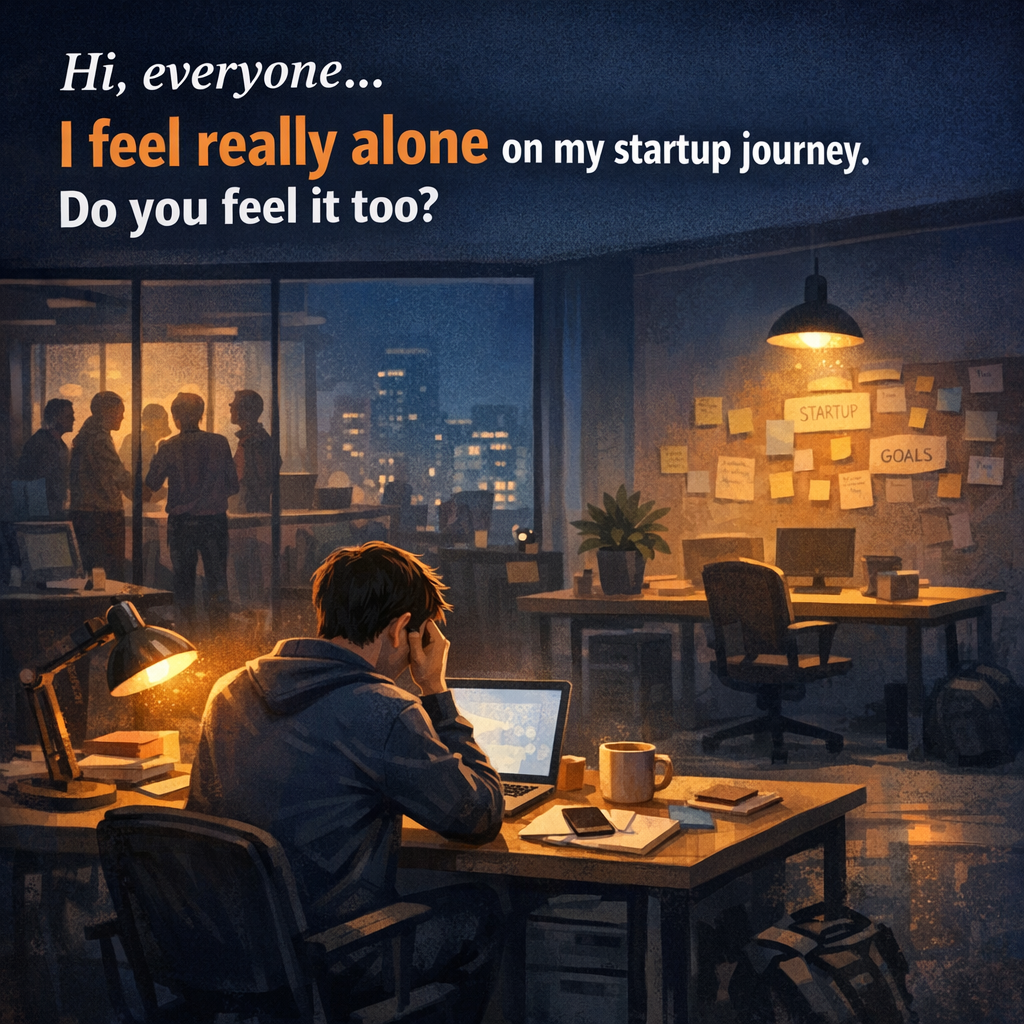
The Quiet Start and the Weight of Doubt
It usually starts quietly. A late night. A second screen. A thought you can’t shake: “What if I build something of my own?” Then, just as quickly, the doubt creeps in. No one else sees what you see. Your friends don’t quite get it. You feel guilty working on your idea during stolen hours. And the voice in your head keeps asking a brutal question: “Who do you think you are?”
If that sounds familiar, you’re not alone—and more importantly, you’re not broken. What you’re feeling is a common, often unspoken phase of building something meaningful from scratch. In this article, we’ll unpack why this stage feels so isolating, how your mindset may be shaping your experience more than you realize, and what you can actually do to keep going without burning out or turning bitter.
We’ll explore the psychology behind the “builder’s loneliness,” how to shift your motivation from desperation to purpose, and practical ways to stay grounded while pursuing something uncertain.
The Hidden Weight of Building Alone
There’s a version of entrepreneurship that gets marketed online: freedom, success, and validation. What’s less talked about is the long stretch of obscurity before any of that happens. Most early-stage builders operate in silence—no audience, no applause, and often no clear feedback that they’re on the right track.
This isolation can feel like rejection, but it’s not. It’s simply the nature of creating something new. Your friends and family may not understand your vision, not because they don’t care, but because they aren’t living in the same mental space. They’re playing a different game with different rules.
In fact, this phase is almost a requirement. It forces you to rely less on external validation and more on internal clarity. Many founders—from solo indie developers to startup CEOs—report that their early days were marked by doubt, not confidence. Airbnb’s founders were rejected by investors repeatedly before gaining traction. What kept them going wasn’t validation—it was belief in the problem they were solving.
(Suggested visual: A simple timeline showing “Idea → Isolation → Early Struggles → Traction” to normalize the early phase.)
When Motivation Comes from the Wrong Place
A major source of emotional burnout comes from building for the wrong reason. If your primary motivation is escaping something—financial stress, a bad job, or a difficult economy—your work becomes fueled by pressure and fear.
That kind of motivation doesn’t last. It creates urgency, but not endurance.
Psychologically, this is called avoidance motivation. You’re trying to move away from pain rather than toward something meaningful. The result? Every setback feels like confirmation that you’re stuck, and every delay feels like failure.
Compare that to approach motivation—building toward a vision you genuinely care about. This doesn’t eliminate difficulty, but it changes how you interpret it. Obstacles become part of the process, not signs that you’re failing.
A simple exercise can help clarify this shift:
Ask yourself two questions:
“What am I trying to escape?”
“What am I trying to build?”
If your answers are heavily weighted toward the first, it may be time to redefine your “why.”
Navigating Self-Doubt and Staying Connected
That internal voice telling you that you’re not capable isn’t random. It’s a defense mechanism. Your brain prefers familiarity and safety, even if your current situation isn’t ideal. When you try to change your identity—from employee to creator, from consumer to builder—that voice pushes back.
It doesn’t mean it’s right.
In fact, that resistance often signals growth. You’re stepping into something unfamiliar, and your mind is trying to pull you back to what it knows.
Research in cognitive psychology shows that negative self-talk increases under uncertainty. When outcomes aren’t guaranteed, the brain fills the gap with worst-case assumptions. Recognizing this pattern is powerful—it allows you to separate your thoughts from reality.
Instead of asking, “Am I good enough?” try reframing the question:
“What skills do I need to become the person who can do this?”
This shifts your focus from identity to process, which is where actual progress happens.
Being physically alone while working on something is normal. Feeling completely disconnected from others is what becomes harmful.
One of the most effective ways to reduce that sense of isolation is to find people who are on a similar path. Not necessarily successful founders—just people who are in the arena, figuring things out.
Communities matter more than motivation. Whether it’s online forums, local meetups, or small accountability groups, being around others who understand the struggle helps normalize your experience.
Even a single conversation with someone going through the same challenges can reset your perspective. You realize you’re not uniquely failing—you’re participating in a difficult process.
(Suggested visual: A simple diagram showing “Isolation → Shared Experience → Perspective Shift.”)
Staying Grounded While Moving Forward
When everything feels heavy, vague advice like “just keep going” isn’t enough. You need structure—something tangible you can rely on when motivation drops.
Start by narrowing your focus. Instead of thinking about the entire future of your project, define what progress looks like this week. Small, measurable wins create momentum and reduce overwhelm.
Next, set boundaries around your time. If you’re working on your idea alongside a full-time job, guilt can creep in easily. Decide intentionally when you’ll work on your project and when you won’t. This removes the constant mental tug-of-war.
Your physical health matters more than you think. Lack of sleep, poor diet, and stress amplify negative thinking. Even basic routines—walking, eating properly, stepping away from screens—can stabilize your mood enough to think clearly again.
Finally, document your progress. Keep a simple log of what you’re building, what you’ve learned, and what’s working. When you feel stuck, looking back at tangible progress helps counter the illusion that “nothing is happening.”
(Suggested formatting: A numbered checklist for weekly planning or daily habits.)
Building something from nothing is supposed to feel uncertain. The doubt, the isolation, the internal resistance—they’re not signs that you’re failing. They’re signs that you’re operating outside your comfort zone.
But there’s an important distinction: struggle doesn’t automatically lead to progress. How you interpret and respond to that struggle determines whether you move forward or burn out.
If you can shift your motivation from fear to purpose, treat your inner critic as noise rather than truth, and connect with others who understand the journey, the experience changes. It doesn’t become easy—but it becomes sustainable.
You don’t need everyone to believe in what you’re building. You just need enough clarity to keep going.
References and Further Reading
“Mindset: The New Psychology of Success” by Carol Dweck — explores growth vs fixed mindset.
“The Lean Startup” by Eric Ries — practical framework for building under uncertainty.
Research on intrinsic vs extrinsic motivation (Deci & Ryan, Self-Determination Theory).
Indie Hackers (indiehackers.com) — community of founders sharing real journeys.
Y Combinator Startup Library — free resources on early-stage building.