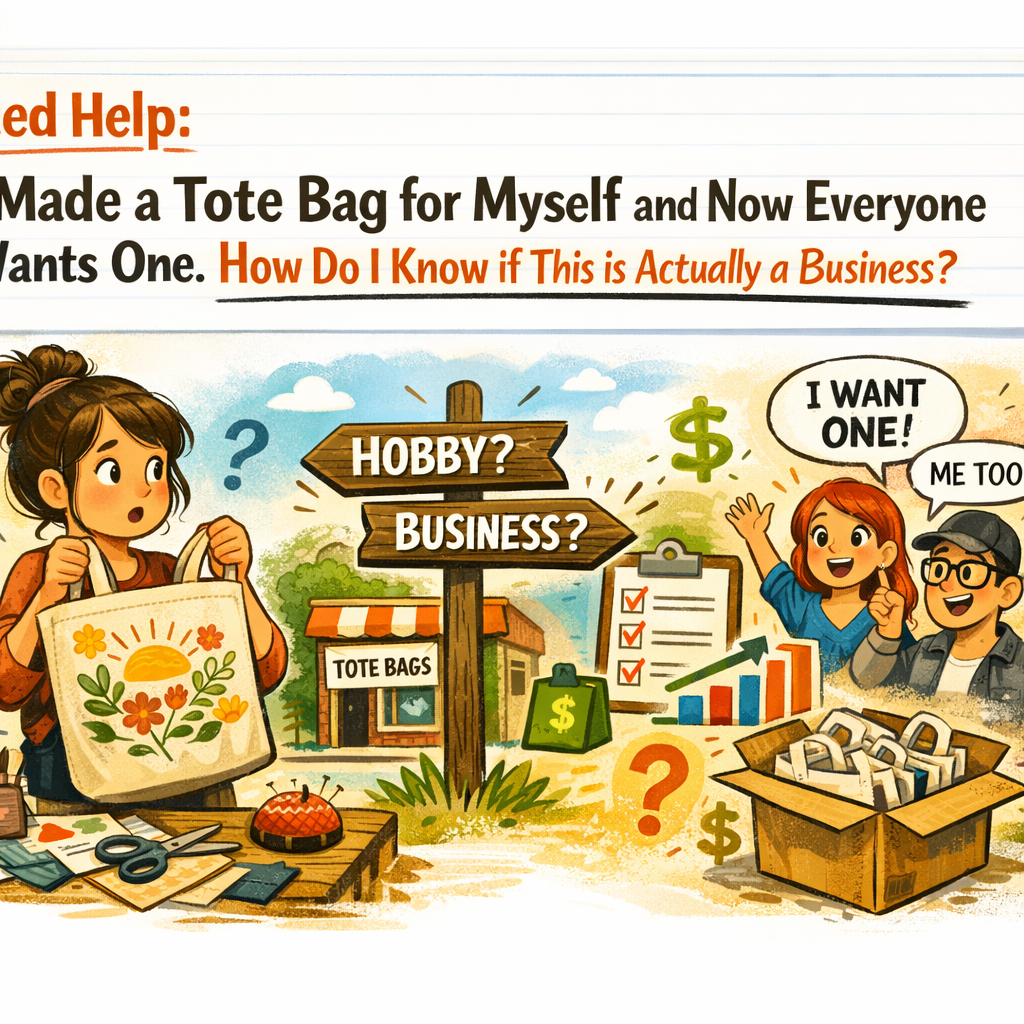
Recognizing Early Signals of Demand
It often starts with a simple question: “Where did you get that?” When people repeatedly admire something you made for yourself, it’s more than a compliment—it’s a signal. If you’ve created a beautiful, functional cotton tote and your friends keep asking for one, you may be sitting on the early signs of a viable business. But how do you move from compliments to customers? And how can you tell if your idea is worth pursuing?
This article walks you through how to validate your tote idea, estimate what people will pay, and take practical first steps toward turning your handmade product into a small business. You’ll learn how others have started in similar ways, how to test demand without big risks, and how to build confidence in your decision.
It’s tempting to assume that friends asking for your tote equals guaranteed success. While that’s a promising sign, it’s not the same as confirmed demand. The key difference is whether people are willing to pay—not just praise.
A strong early indicator is “unsolicited interest.” If people go out of their way to ask about your product, that suggests organic appeal. Many successful small brands began exactly this way. For example, Sara Blakely, founder of Spanx, initially tested her idea by sharing it with friends and observing real reactions before investing heavily.
To validate your tote idea, you don’t need a full business setup. Instead, focus on small experiments:
Start by offering a limited number of totes for sale rather than giving them away. Even a small batch—say 10 to 20 bags—can tell you a lot. If people hesitate when a price is introduced, that’s valuable information. If they buy quickly, that’s even better.
You can also use social media as a testing ground. Post photos of your tote, describe its features, and ask if people would buy one. Track not just likes, but direct messages and serious inquiries.
(Suggested visual: A simple chart showing the difference between “interest” and “purchase intent.”)
Finding the Right Price for Your Tote
Pricing is one of the biggest challenges for new creators. Charge too little, and you undervalue your work. Charge too much, and you risk scaring off buyers. The goal is to find a balance between cost, value, and market expectations.
Start with your costs. Calculate the price of materials (cotton fabric, thread, tools), plus the time it takes you to make one tote. Even if you enjoy the process, your time has value.
Next, research similar products. Look at handmade marketplaces like Etsy or local artisan shops. You’ll likely find cotton totes ranging from $15 to $60 or more, depending on design, durability, and branding.
Then consider your unique value. Is your tote more durable? Does it have thoughtful features like pockets or reinforced stitching? Is the design especially appealing? These factors justify higher pricing.
A simple way to test pricing is to offer your tote at different price points to different audiences or batches. For example, sell your first batch at a slightly lower “introductory” price and gradually increase it as demand grows.
(Suggested visual: A pricing breakdown diagram showing cost, markup, and profit.)
Starting Small and Learning as You Go
Many successful small businesses didn’t begin with a formal plan—they started with a single product people loved. Handmade brands, especially in fashion and accessories, often grow organically from personal use.
For example, the founder of Baggu began by designing reusable bags for personal use and small sales, eventually scaling into a well-known brand. The key was starting small, listening to customers, and refining the product.
You can follow a similar path without taking big risks:
First, create a small batch. Don’t overproduce. This keeps your investment low and allows you to adjust based on feedback.
Second, sell directly to people you already know or through simple platforms like Instagram or local markets. You don’t need a full website right away.
Third, gather feedback. Ask buyers what they love, what could improve, and how they use the tote in daily life.
Fourth, refine your product. Small changes—like adding a pocket or adjusting strap length—can significantly increase perceived value.
This step-by-step approach helps you build confidence while minimizing financial risk.
(Suggested visual: A simple flow diagram showing idea → test → feedback → improve → repeat.)
A Simple Process to Validate Your Idea
If you’re unsure whether to fully commit, think of your first phase as a “pilot project.” The goal is not perfection—it’s learning.
Here’s a straightforward process you can follow:
Create 5–10 high-quality totes.
Photograph them clearly in natural light.
Share them on social media or with your network.
Set a clear price and see how people respond.
Track how many people express interest versus how many actually buy.
If you sell out quickly, that’s a strong signal to continue. If not, analyze why. Was it the price, design, or visibility?
You can also experiment with pre-orders. This reduces risk because you only produce what has already been paid for.
Practical Tips and Making Your Idea Real
Start before you feel ready. Waiting for perfect branding or a full product line can delay valuable learning. Your first version doesn’t have to be your final version.
Focus on quality over quantity. A well-made tote that lasts will generate repeat customers and word-of-mouth.
Document your journey. Share behind-the-scenes moments—cutting fabric, sewing, packaging. This builds connection and trust with potential buyers.
Don’t ignore pricing psychology. Round numbers feel straightforward, while slightly higher pricing can signal quality.
Protect your time. If demand grows, consider how many totes you can realistically produce without burnout.
(Suggested formatting: A bullet-point checklist could be added here for quick reference.)
Images of your tote in use—carried at a market, packed with groceries, or styled with outfits—can help potential customers imagine owning it.
Infographics explaining your process (e.g., “from fabric to finished tote”) can build appreciation for the craftsmanship.
A simple comparison chart of your tote versus generic alternatives could highlight your product’s strengths.
Starting a business doesn’t always begin with a grand plan. Sometimes it begins with a single product people genuinely love. Your cotton tote already has something many ideas lack: real-world interest.
The next step isn’t to overthink—it’s to test. Start small, charge a fair price, and pay attention to how people respond. You don’t need certainty to begin; you need curiosity and a willingness to learn.
If people are willing to pay for your tote and come back for more, you’ll have your answer. And if not, you’ll still gain valuable insight that brings you closer to something that works.
References and Further Reading
“The Lean Startup” by Eric Ries – A practical guide to testing business ideas with minimal risk.
Etsy Seller Handbook – Offers insights into pricing, branding, and selling handmade goods.
Shopify Blog (shopify.com/blog) – Contains case studies of small product-based businesses.
Harvard Business Review articles on customer validation and product-market fit.
Exploring these resources can deepen your understanding and help you move forward with clarity and confidence.