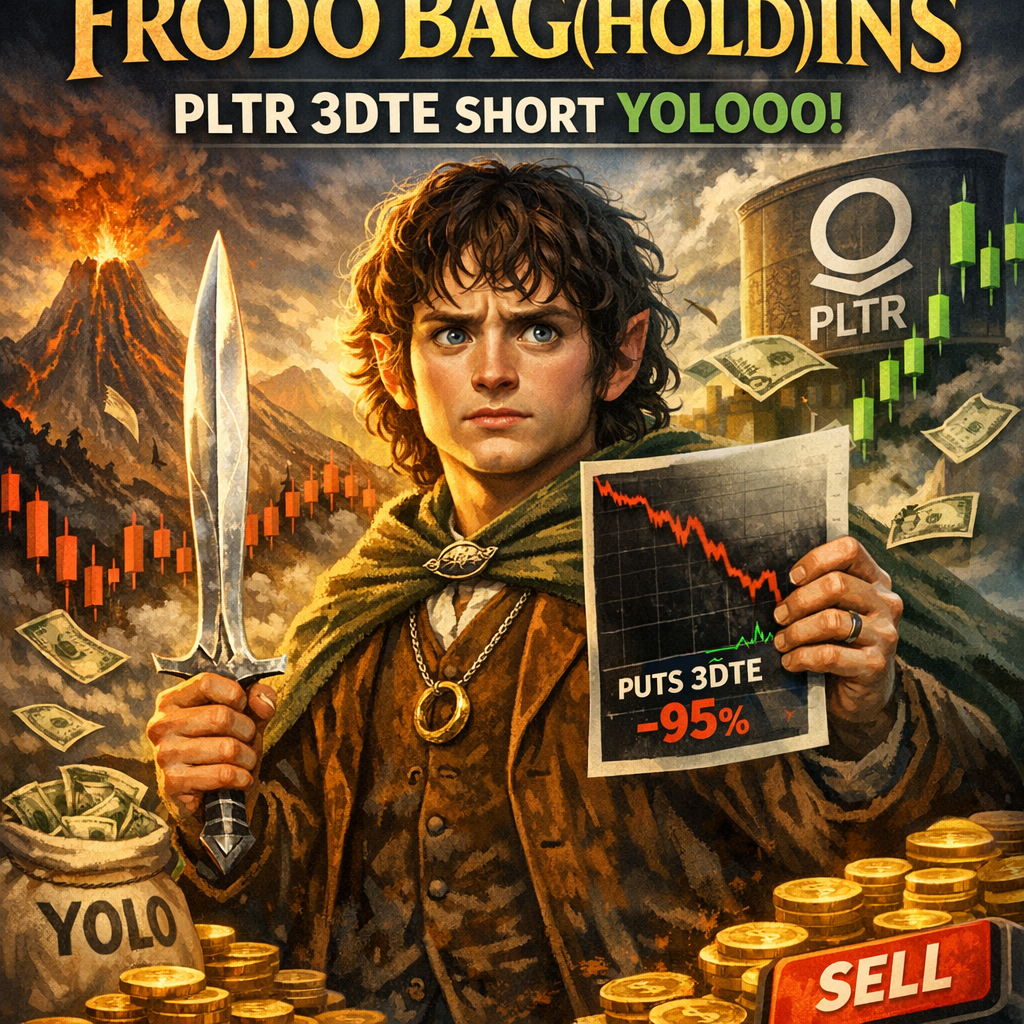
Momentum, Hype, and the Pull of Short-Term Predictions
Markets have a funny way of making everyone feel like a genius right before reminding them who’s really in charge. One week, traders are confidently calling for a run to 180 by Friday; the next, the same crowd is whispering about overvaluation, profit-taking, and whether a certain famously contrarian investor—often jokingly cast as a market Gandalf—has once again seen something others have missed. If you’ve ever felt caught between hype and fear, you’re not alone.
This article unpacks what’s really going on beneath that chaotic mix of bold predictions, looming bearish warnings, and internet-fueled conviction. We’ll explore what “overvaluation” actually means, why profit-taking can trigger sudden reversals, how influential figures like Michael Burry shape sentiment, and how to navigate markets when everything feels both unstoppable and on the brink of collapse.
Understanding Market Euphoria and the “180 by End of Week” Mentality
Short-term price targets—like predicting a stock or index hitting 180 by the end of the week—often reflect sentiment more than fundamentals. These forecasts tend to emerge during periods of strong upward momentum, where recent gains create a sense that the trend will continue indefinitely.
This phenomenon is known as momentum bias. When prices rise quickly, traders pile in, fearing they’ll miss out. Social platforms amplify this effect, turning speculation into a kind of collective narrative. The result is a feedback loop: rising prices attract attention, attention attracts buyers, and buyers push prices higher—at least for a while.
A classic example is the meme stock surge of 2021. Stocks like GameStop and AMC saw explosive growth driven less by underlying financial performance and more by coordinated enthusiasm and short squeezes. While some traders made significant gains, others entered late and suffered losses when prices corrected.
[Suggested visual: A chart showing rapid price acceleration followed by sharp correction to illustrate momentum cycles.]
The key takeaway is that bold short-term predictions often say more about crowd psychology than actual value.
Overvaluation and the Fragility of Confidence
Overvaluation: What It Really Means (and Why People Start “Quaking”)
When people start worrying about overvaluation, they’re essentially asking whether an asset’s price has drifted too far from its intrinsic value. This doesn’t mean the price will immediately fall—but it does increase the risk of a correction.
Common valuation metrics include price-to-earnings (P/E) ratios, revenue multiples, and discounted cash flow estimates. When these metrics rise significantly above historical norms, analysts begin to question sustainability.
However, overvaluation is not a precise science. Markets can remain “overvalued” for long periods, especially when driven by strong narratives, low interest rates, or technological optimism. The late 1990s dot-com bubble is a textbook case: valuations soared for years before eventually collapsing.
What causes the sudden shift from confidence to fear? Often, it’s a trigger—such as disappointing earnings, macroeconomic changes, or a shift in liquidity. When sentiment turns, the same crowd that fueled the rise can accelerate the decline.
[Suggested visual: A comparison chart of historical P/E ratios vs. current levels.]
Profit-Taking and the Mechanics of Market Pullbacks
Profit-Taking: The Silent Catalyst of Market Pullbacks
Even in strong markets, prices don’t rise in a straight line. One of the most common reasons for pullbacks is simple: investors locking in gains.
Profit-taking happens when traders decide that current prices are “good enough” and sell their positions. This behavior is especially common after rapid price increases, where early investors sit on substantial unrealized gains.
Here’s how it typically unfolds:
First, early investors begin selling to secure profits. Then, prices dip slightly, triggering stop-loss orders and cautious selling. As momentum weakens, more participants exit positions, creating a cascading effect.
This doesn’t necessarily signal a long-term downturn—it can simply be a reset before the next move. But in highly speculative environments, profit-taking can quickly snowball into a sharper correction.
[Suggested visual: A step-by-step flow diagram showing how profit-taking leads to broader market declines.]
Contrarian Signals and the Influence of Market Voices
The “Michael Burry Effect”: Why Contrarian Voices Matter
Few names carry as much weight in market contrarianism as Michael Burry. Known for predicting the 2008 financial crisis, Burry has become a symbol of skepticism during times of exuberance. Whether he’s right or early (or occasionally wrong), his presence alone can influence sentiment.
The humorous idea of Burry as “Gandalf”—appearing with warnings just as the market celebrates—captures an important truth: markets need dissenting voices. When everyone agrees on a bullish outlook, risks often go underappreciated.
Contrarian investors look for situations where the consensus may be overly optimistic or pessimistic. They don’t always time the market perfectly, but they often identify structural risks before they become obvious.
That said, blindly following any single figure—no matter how famous—is risky. Even the most successful investors have periods of underperformance. The goal isn’t to copy them, but to understand the reasoning behind their views.
The joke that “Burry has his fingers in a lot of pies” highlights another reality: high-profile investors shape narratives simply by participating in them. Their moves can spark discussions, headlines, and sometimes exaggerated reactions.
[Suggested visual: Timeline of major Burry predictions vs. market outcomes.]
Emotions, Discipline, and Navigating Uncertain Markets
When Markets Feel “Lowkey Evil”: Emotional Cycles and Risk
It’s not uncommon for traders to describe markets as irrational—or even “evil”—especially during volatile swings. This feeling often comes from the disconnect between expectations and outcomes.
Markets are driven by a mix of logic, emotion, and external forces. Prices can rise despite weak fundamentals or fall despite strong ones. For individual traders, this unpredictability can feel personal, even though it isn’t.
Behavioral finance helps explain this dynamic. Cognitive biases like overconfidence, herd mentality, and loss aversion influence decisions in ways that aren’t always rational. Recognizing these biases is a crucial step toward better decision-making.
Ultimately, markets aren’t out to get anyone—but they do reward discipline and punish complacency.
Practical Tips for Navigating Hype and Fear
When caught between bullish predictions and bearish warnings, it helps to ground your approach in a few practical principles.
Start by defining your time horizon. Short-term trades and long-term investments require very different strategies. Mixing the two often leads to poor decisions.
Next, use position sizing to manage risk. Avoid putting too much capital into a single trade, especially in highly volatile environments.
It’s also important to separate narrative from data. Ask yourself whether a price move is supported by fundamentals or driven primarily by sentiment.
Finally, have an exit plan before entering a position. Knowing when to take profits—or cut losses—can prevent emotional decision-making.
[Suggested formatting: A small checklist or numbered list summarizing these tips for quick reference.]
The tension between bold price predictions, fears of overvaluation, profit-taking, and high-profile bearish calls is a natural part of market cycles. Each element reflects a different layer of how markets function—from human psychology to institutional strategy.
Rather than choosing sides between hype and fear, the more effective approach is to understand both. Recognize when sentiment is driving prices, stay aware of valuation risks, and maintain a disciplined strategy regardless of the noise.
Markets will always have their moments of chaos—and their cast of characters warning, cheering, and speculating along the way. Your edge comes from staying grounded when others aren’t.
References and Further Reading
For readers interested in digging deeper, consider exploring books like “The Big Short” by Michael Lewis for insights into contrarian investing, and “A Random Walk Down Wall Street” by Burton Malkiel for a broader understanding of market behavior.
Web resources such as Investopedia offer accessible explanations of valuation metrics and market psychology, while financial data platforms like Yahoo Finance or Bloomberg can help you track real-time indicators and trends.
Staying informed—and skeptical in the right ways—is the best kind of diligence you can bring to the market.