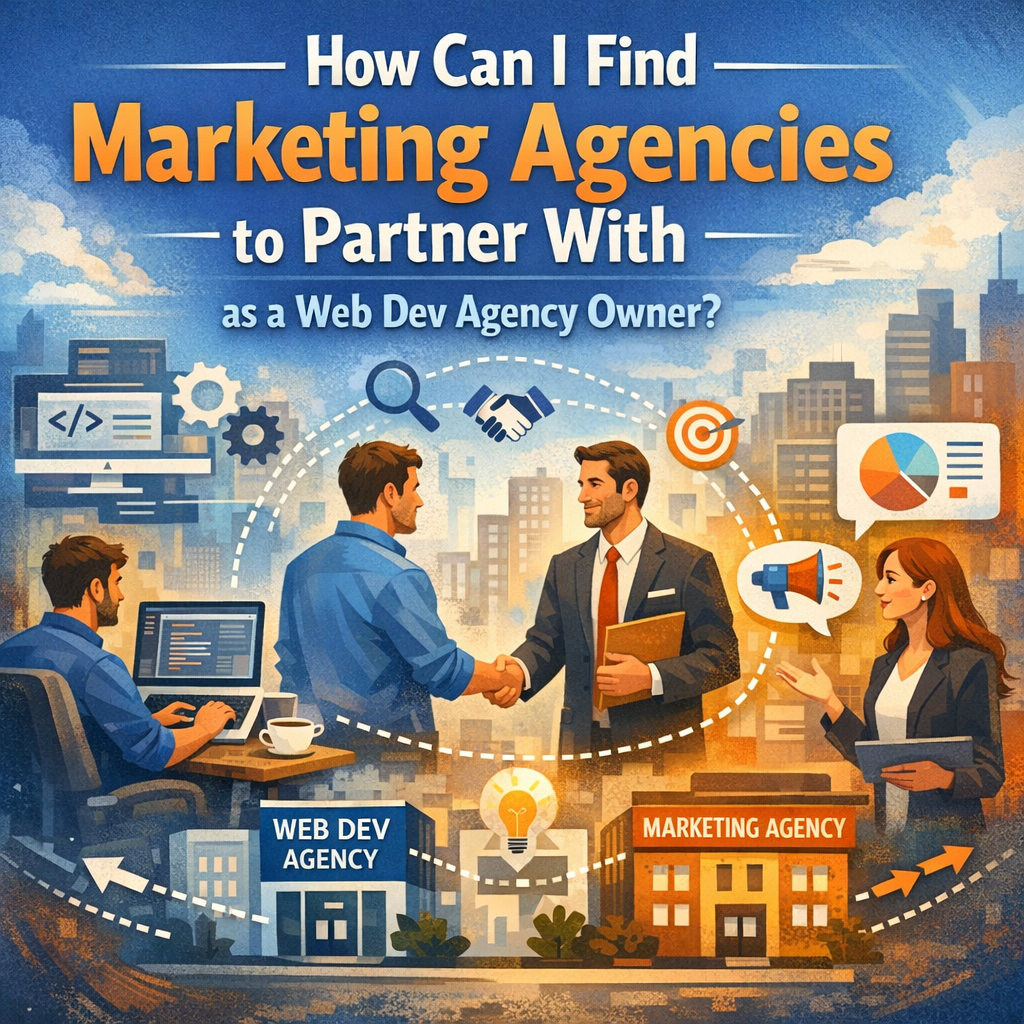
Why Agencies Are Turning to White-Label Development
Many marketing agencies are excellent at branding, lead generation, and client relationships—but quietly struggle with one critical piece: reliable web development. At the same time, skilled development teams often find themselves searching for consistent, high-quality clients. This gap creates a powerful opportunity. If you have a capable web development team and design resources, partnering with agencies that lack in-house technical expertise can unlock a steady stream of work through white-label collaborations.
In this article, you’ll learn how white-label partnerships between developers and marketing agencies work, why they’re increasingly popular, and how you can position your team to become the go-to development partner for agencies. We’ll also walk through a practical approach to finding and securing these partnerships, along with tips to make them successful long-term.
Marketing agencies today are under pressure to offer full-service solutions. Clients expect everything—from branding and SEO to fully functional websites and e-commerce platforms. However, building an in-house development team is expensive, time-consuming, and often unnecessary for agencies focused on marketing strategy.
This is where white-label web development comes in. Instead of hiring developers, agencies partner with external teams who handle the technical work behind the scenes while the agency presents the final product as their own.
For example, a digital marketing agency specializing in paid ads might land a client who needs a custom website. Without a development team, they risk losing the deal—or worse, delivering subpar work. By partnering with a reliable web development team, they can confidently expand their services without increasing overhead.
This model is increasingly common. According to industry reports, outsourcing and white-label services have grown significantly as agencies aim to stay lean while scaling their offerings.
[Suggested visual: A simple diagram showing how a client, agency, and white-label developer interact in a workflow]
The Value a Development Team Brings
If you have a team capable of building websites across multiple technologies—whether custom-coded solutions using HTML, CSS, JavaScript, React, and Next.js, or CMS platforms like WordPress, Wix, Squarespace, and Shopify—you already offer something incredibly valuable: flexibility.
Agencies often work with a wide range of clients, from startups needing quick CMS builds to enterprises requiring custom applications. Being able to adapt to different project needs makes you far more attractive as a partner.
Adding a Figma designer into your workflow strengthens your offering even further. Many agencies struggle to translate ideas into polished designs before development begins. By offering design-first workflows, you help agencies:
• Present professional mockups to clients early
• Reduce revisions during development
• Improve overall project efficiency
A typical workflow might look like this:
First, the agency gathers requirements from the client. Then your team creates Figma designs for approval. Once finalized, development begins using the appropriate technology stack. Finally, the completed site is delivered to the agency, who presents it to the client under their brand.
This seamless process is exactly what agencies are looking for.
[Suggested visual: A step-by-step flowchart of the design-to-development pipeline]
Partnership Models and How They Function
There are generally two main ways these partnerships are structured, and understanding both will help you position your services effectively.
The first is revenue sharing. In this model, the agency charges the client and pays you a percentage of the project fee. For example, if an agency charges $5,000 for a website, you might receive $2,500–$3,500 depending on the agreement.
The second is fixed pricing. Here, you provide the agency with set rates for specific services, and they mark up your pricing when selling to their clients. This model is often preferred by agencies because it gives them more control over their profit margins.
Each model has pros and cons. Revenue sharing aligns incentives but can vary in income. Fixed pricing offers predictability but requires careful pricing strategy on your end.
A real-world example: A small branding agency without developers partners with a web team on a fixed-price basis. The web team charges $2,000 for a standard WordPress site. The agency sells it to clients for $3,500, keeping the margin while outsourcing the technical work.
Regardless of the model, trust and communication are critical. Agencies need to feel confident that you will deliver quality work on time, as your performance directly impacts their reputation.
[Suggested visual: A comparison table of revenue share vs fixed pricing models]
Finding and Winning the Right Agency Partners
Finding the right agencies is less about volume and more about targeting the right fit. You’re specifically looking for agencies that offer marketing services but lack in-house development capabilities.
Start by identifying agencies through platforms like LinkedIn, Clutch, and Google searches. Look for signs such as limited technical case studies, heavy focus on marketing services, or job postings that suggest they outsource development.
Once you’ve identified potential partners, your outreach should be clear and value-driven. Instead of simply offering services, position yourself as a solution to a problem they already have.
A simple outreach approach might look like this:
Introduce your team and capabilities. Highlight your ability to handle both design (via Figma) and development across multiple platforms. Emphasize reliability, turnaround time, and white-label experience. Then suggest a quick call to explore collaboration.
It’s also helpful to prepare a portfolio tailored to agencies. Include examples of different types of websites, industries, and technologies to demonstrate versatility.
Once you land a conversation, focus on understanding their workflow and pain points. The more you align your process with theirs, the easier it becomes for them to integrate you into their operations.
[Suggested visual: Screenshot examples of outreach messages or a sample portfolio layout]
Building Strong, Long-Term Collaborations
Landing a partnership is just the beginning. The real value comes from maintaining long-term relationships that generate consistent work.
One of the most important factors is communication. Agencies need quick responses and clear updates, especially when dealing with client deadlines. Even small delays or miscommunications can damage trust.
Another key factor is consistency. Delivering high-quality work every time builds confidence and reduces the need for oversight from the agency.
It’s also important to stay invisible when needed. In white-label arrangements, the agency owns the client relationship. Respecting that boundary is essential for maintaining trust.
Additionally, consider offering scalable pricing or packages. Agencies often prefer predictable costs, so having clear pricing tiers can make it easier for them to sell your services.
Finally, think long-term. A single agency partnership can lead to dozens of projects over time. Investing in the relationship—through reliability, flexibility, and professionalism—pays off significantly.
[Suggested visual: A checklist infographic for maintaining successful partnerships]
White-label web development partnerships offer a powerful opportunity for both developers and marketing agencies. Agencies can expand their services without hiring in-house teams, while development teams gain access to a steady pipeline of projects.
If you have a capable team, a flexible tech stack, and a design-first approach using tools like Figma, you are already well-positioned to succeed in this space. The key lies in finding the right partners, presenting your value clearly, and building strong, trust-based relationships.
As the demand for full-service digital solutions continues to grow, these partnerships will only become more common—and more valuable. Taking the time to build them now can set the foundation for consistent, scalable growth.
For those interested in exploring this topic further, consider the following resources:
• Articles on white-label services from platforms like HubSpot and Clutch
• LinkedIn insights on agency outsourcing trends
• Case studies from digital agencies that use outsourced development teams
• Books and blogs on scaling service-based businesses and partnerships
These resources can provide deeper insight into market trends, pricing strategies, and partnership models that can help refine your approach.