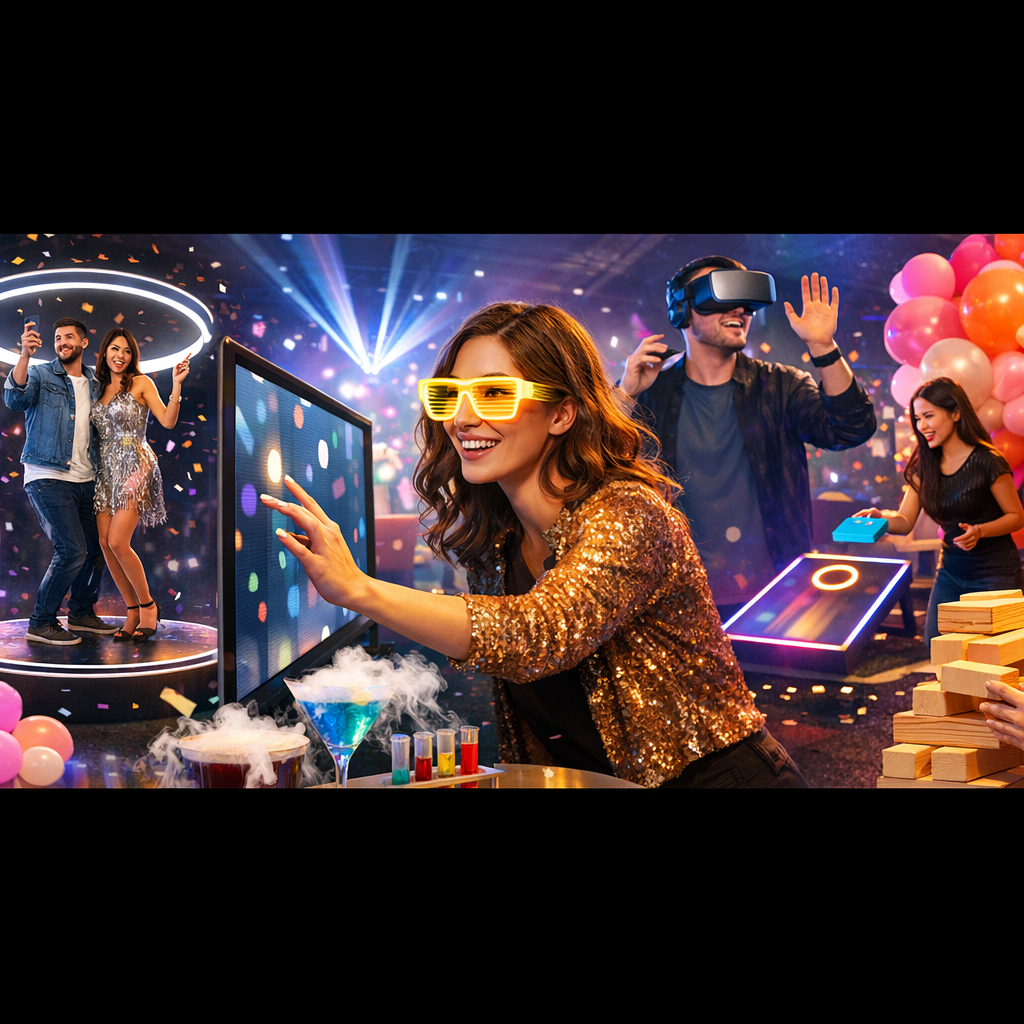
The New Reality of Event Engagement
Walk into almost any corporate event or networking reception today, and you’ll notice something subtle but important: guests aren’t as easily impressed as they used to be. The photo booth? Seen it. The magician? Probably twice. Even high-end food stations can start to blur together after a while. In a world where attendees have experienced dozens—if not hundreds—of events, novelty alone isn’t enough anymore.
This shift is forcing planners, destination management companies (DMCs), hotels, and corporate event teams to rethink what “engagement” really means. It’s no longer about placing entertainment in a room—it’s about creating experiences that naturally pull people in, spark interaction, and keep them there.
In this article, we’ll explore why traditional activations are losing impact, what types of interactive experiences are actually working right now, why audience understanding matters more than trends, and how to design activations that guests genuinely engage with instead of walking past.
Why Traditional Entertainment Falls Short
Why Guests Are Harder to Impress Than Ever
Event fatigue is real. Today’s attendees are more experienced, more selective, and more aware of what feels “standard.” Many have attended similar conferences, trade shows, and social events across industries, meaning they can quickly recognize recycled ideas.
But the issue isn’t just repetition—it’s also passive design. Traditional entertainment often asks guests to watch rather than participate. And in networking-heavy environments, people are looking for something that helps them connect, not just something to observe.
This is why activations that blend entertainment with participation—and even better, with conversation—are outperforming static or purely visual elements.
A helpful visual here would be a simple chart comparing “passive entertainment” vs. “interactive engagement,” highlighting differences in dwell time, participation, and networking impact.
What Interactive Activations Are Working Now
What’s Working Now: Interactive, Social, and Experiential Activations
One activation that has been gaining traction across multiple event types is live cigar rolling. It works particularly well because it checks several key boxes: it’s visual, it’s tactile, it invites curiosity, and it creates a natural gathering point. Guests don’t just observe—they ask questions, linger, and often start conversations with others standing nearby.
This type of activation has been especially effective at golf tournaments, sponsor lounges, trade shows, VIP receptions, cocktail hours, and charity galas. It functions as both entertainment and hospitality, which is a powerful combination.
But cigar rolling is just one example of a broader trend. The most successful activations today tend to share a few characteristics:
They are process-driven. Guests enjoy watching something being created in real time, whether it’s handcrafted cigars, custom cocktails, or personalized artwork.
They invite participation. The best experiences allow guests to ask questions, customize something, or take part in the process.
They facilitate connection. Instead of isolating guests, they create shared moments that make networking easier and more natural.
Other examples gaining traction include live calligraphy or engraving stations, interactive mixology bars, custom fragrance blending, digital caricature artists, and even AI-powered photo or content creation booths that go beyond basic snapshots.
An infographic here could map different activation types against “engagement level” and “conversation potential.”
Why Audience Understanding Matters More Than Trends
The Most Important Insight: It’s Not About Trends—It’s About the Audience
While it’s tempting to look for “what’s trending,” experienced planners consistently point out a more important truth: the best activation is the one that fits your specific audience.
An activation that performs exceptionally well at one event can fall flat at another. For example, while cigar rolling may thrive in a luxury golf setting or executive VIP lounge, it may not resonate with a health-conscious group or a younger, wellness-focused audience.
This is where many event strategies miss the mark. Instead of starting with the audience, they start with the activation.
A more effective approach is to reverse that process:
First, understand your guests. What are their interests, values, and expectations? Have they attended similar events before? What would feel new or meaningful to them?
Second, identify the type of experience that aligns with those insights. Do they prefer hands-on activities, intellectual stimulation, social interaction, or entertainment?
Finally, select or design an activation that delivers on those preferences in a way that feels authentic.
This audience-first mindset not only improves engagement but also reduces the risk of investing in activations that look impressive but fail to connect.
A useful visual here could be a simple three-step flow diagram: Audience Insights → Experience Type → Activation Selection.
Designing Activations That Drive Real Engagement
Designing Activations That Encourage Real Interaction
If the goal is to create experiences guests genuinely engage with, the design of the activation matters just as much as the concept itself.
Start by thinking about flow and accessibility. If an activation is tucked away or feels exclusive, guests may hesitate to approach it. Successful activations are visible, inviting, and easy to join without instructions.
Next, consider dwell time. The longer guests stay, the more opportunities there are for conversation and connection. Activations like cigar rolling or live art naturally extend dwell time because guests are curious about the process.
Another key factor is social proof. When guests see others gathered, they’re more likely to join. This is why experiences that create small crowds tend to build momentum throughout an event.
Finally, think about takeaways. Whether it’s a physical item, a personalized creation, or even a memorable interaction, guests value experiences that leave a lasting impression.
Case studies from trade shows have shown that booths with interactive elements can increase engagement time by up to 2–3x compared to static displays. While exact results vary, the pattern is consistent: participation drives retention.
A side-by-side layout or table comparing “low-engagement booth” vs. “high-engagement activation” would be helpful here.
Practical Tips for Event Planners and Teams
To turn these insights into action, planners can focus on a few practical strategies that consistently improve engagement outcomes.
Start with small pilot activations. Instead of overhauling an entire event, test one or two interactive experiences and observe how guests respond.
Brief your vendors properly. The best activations depend on the people delivering them. Ensure they understand the tone of the event and are comfortable engaging with guests.
Design for conversation. Ask yourself: “Will this help people talk to each other?” If the answer is no, reconsider or adapt the concept.
Balance novelty with relevance. Something new is good—but only if it makes sense for your audience.
Measure engagement. Track metrics like dwell time, participation rates, and guest feedback to refine future events.
This section could benefit from a clean bullet-point checklist or a quick-reference guide for planners.
Conclusion: Engagement Is the New Entertainment
The era of passive event entertainment is fading. Today’s guests are looking for experiences that feel interactive, meaningful, and socially engaging. Activations like live cigar rolling succeed not just because they’re visually appealing, but because they create moments of connection.
However, the most important takeaway is that there is no universal “best” activation. Success comes from understanding your audience and designing experiences that resonate with them specifically.
For planners, this represents both a challenge and an opportunity. By shifting the focus from trends to people, events can become more memorable, more engaging, and ultimately more effective.
If you’re planning your next event, don’t just ask what’s popular—ask what will truly connect.
References and Further Reading
For those interested in exploring this topic further, consider looking into industry resources such as EventMB (Event Manager Blog) for trends in event design, PCMA (Professional Convention Management Association) for research on attendee engagement, and Freeman’s annual Event Trends Report, which often includes data on experiential marketing and attendee behavior.
Additionally, case studies from trade show organizations and hospitality groups can provide real-world examples of successful activations and measurable outcomes.