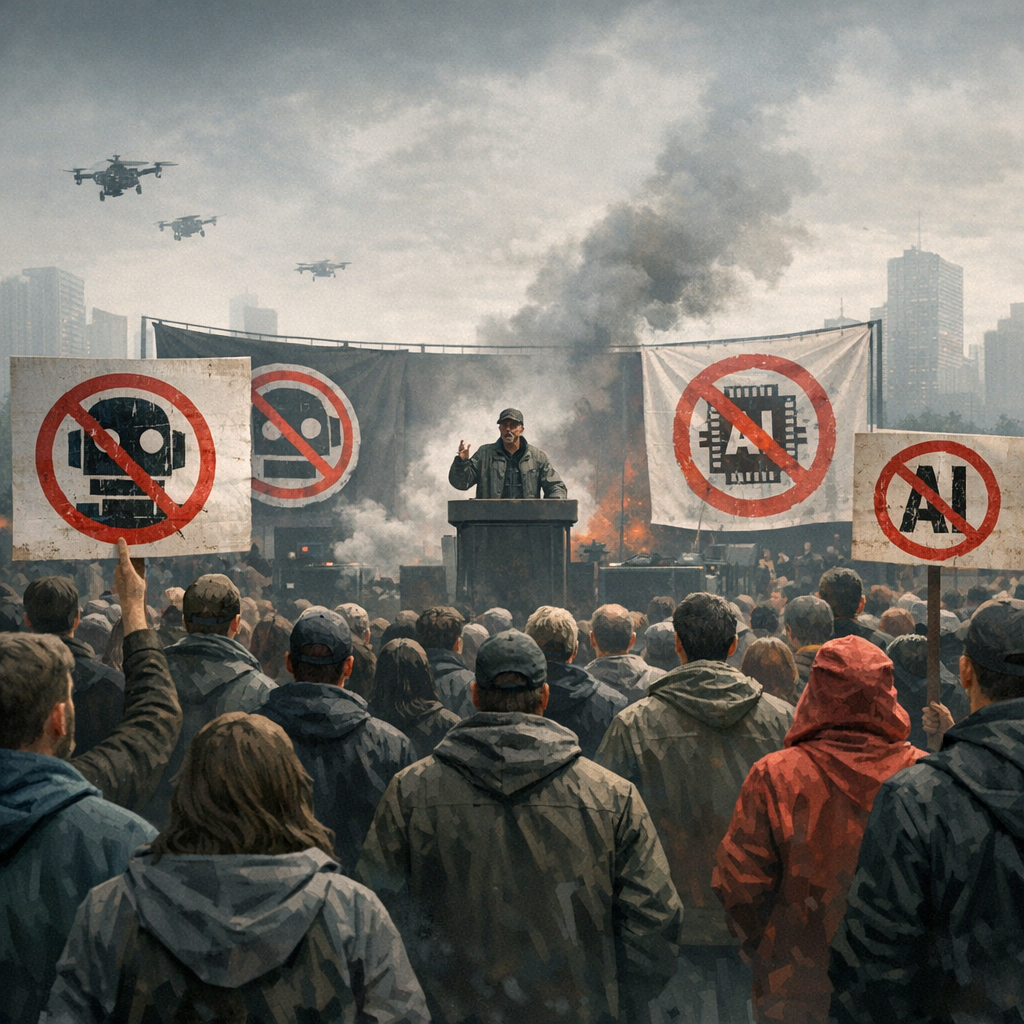
The Noise Around AI in Events
Walk into almost any industry event today and you’ll notice a pattern: every keynote mentions AI, every panel debates it, and nearly every piece of event technology now claims to be “AI-powered.” It’s loud, persistent, and—if you listen closely—often vague. Beneath the buzz, a growing number of professionals are quietly asking a simple question: what problem is this actually solving?
This article explores that tension. Is AI genuinely transforming the events industry, or is it a classic case of hype outpacing usefulness? We’ll unpack why AI feels overwhelming right now, where it does (and doesn’t) add value, and how event professionals can navigate the noise without falling behind—or buying into something that doesn’t serve them.
Riding the Hype Cycle
If AI at events feels excessive, you’re not imagining it. What you’re witnessing is a familiar pattern often referred to as the “hype cycle.” New technologies tend to surge into public consciousness with bold promises, widespread adoption attempts, and a flood of speculative ideas—before reality sets in.
Many seasoned professionals compare today’s AI boom to earlier trends like blockchain. For a time, blockchain dominated conference agendas across industries, regardless of whether it was relevant. Eventually, most organizations either found niche uses for it—or quietly moved on.
AI is following a similar trajectory, but at a much larger scale. The difference is that AI tools, especially large language models, are already useful in certain narrow contexts. That partial usefulness makes the hype more convincing, even when applications are stretched beyond their limits.
At event industry conferences, this often shows up as panels filled with speculative predictions rather than practical insights. The result? Fatigue. Attendees hear a lot about the future, but leave without clear answers for the present.
(Suggested visual: A simple chart illustrating the technology hype cycle, with AI marked near the peak.)
Where AI Helps—and Where It Falls Short
One of the most common criticisms is that AI feels like “a solution in search of a problem.” That’s a strong statement—but it reflects a real disconnect.
The events industry is built on logistics, relationships, creativity, and real-time problem solving. These are complex, human-centered activities. While AI can assist with certain tasks, it doesn’t fundamentally change the core challenges event professionals face.
Where AI does show promise:
- Drafting marketing copy or email campaigns faster
- Summarizing attendee feedback or survey results
- Powering chatbots for basic customer inquiries
- Assisting with scheduling or agenda recommendations
These are useful—but incremental improvements. They don’t redefine the industry.
Where AI struggles:
- Handling high-stakes, real-time decision-making during live events
- Delivering consistent, reliable outputs for mission-critical tasks
- Understanding nuanced human experiences, like attendee satisfaction or networking dynamics
This gap between promise and performance is why many professionals remain skeptical. The tools can help at the margins, but they rarely justify the level of attention—and investment—they’re receiving.
The Broader Costs of Adoption
Beyond usefulness, there are growing concerns about the broader impact of AI adoption.
From an economic perspective, some worry that widespread automation could reduce disposable income for consumers—especially if jobs are displaced or industries are disrupted. For the events industry, this matters directly. If people have less money, they attend fewer events.
There’s also increasing scrutiny around AI’s environmental footprint. Large-scale AI systems require significant energy and water resources, particularly in data centers. In some regions, this has led to rising utility costs and local resource strain.
While these impacts vary widely depending on location and infrastructure, they introduce a layer of complexity that many event professionals are not prepared to evaluate—but may still be affected by.
Operationally, there’s another cost: distraction. When every vendor claims to offer AI-enhanced solutions, it becomes harder to distinguish meaningful innovation from superficial features. Time spent evaluating unnecessary tools is time not spent improving the attendee experience.
(Suggested visual: Infographic showing AI’s potential costs vs. benefits in event operations.)
Learning from the Past and Evaluating What Matters
History offers a useful perspective here. Not every company that rushed into early internet adoption succeeded—and not every late adopter failed.
Retail giants like Walmart and Target entered e-commerce later than some competitors but executed effectively and dominated. Meanwhile, early innovators like Webvan collapsed despite massive investment.
This pattern highlights an important point: timing and application matter more than enthusiasm.
In the context of AI, this means:
- Being first to adopt doesn’t guarantee success
- Waiting for clearer use cases is not inherently risky
- Overinvesting in unproven tools can backfire
There’s also the concept of the “productivity paradox,” where new technologies take years—sometimes decades—to produce measurable gains. AI may follow this path, delivering value gradually rather than through immediate transformation.
So where does this leave event professionals? Ignoring AI entirely isn’t realistic—but neither is embracing it blindly.
A more grounded approach starts with asking better questions.
First, identify actual problems in your workflow. Are you spending too much time on repetitive tasks? Struggling with data analysis? Missing opportunities to personalize attendee experiences?
Then evaluate whether AI tools directly address those problems—or simply add complexity.
A simple step-by-step approach can help:
Step 1: Define the problem clearly. Be specific about what needs improvement.
Step 2: Test AI tools on a small scale. Avoid large commitments upfront.
Step 3: Measure results. Did it save time, reduce costs, or improve outcomes?
Step 4: Compare against non-AI alternatives. Sometimes simpler solutions work just as well.
Step 5: Decide based on evidence, not marketing.
This method keeps the focus on outcomes rather than trends.
Staying Grounded in a Rapidly Changing Landscape
To navigate the current AI landscape effectively, consider these practical strategies:
- Treat AI as a tool, not a strategy. It should support your goals, not define them.
- Be skeptical of vague claims. If a vendor can’t explain how their AI improves results, it probably doesn’t.
- Prioritize reliability over novelty. In live events, consistency matters more than experimentation.
- Invest in human skills. Creativity, relationship-building, and adaptability remain your strongest assets.
- Stay informed—but selective. Follow credible sources and case studies, not just conference hype.
(Suggested formatting: A sidebar or highlighted box with these tips for quick reference.)
AI in the events industry is neither a miracle solution nor a meaningless fad. It’s something in between—useful in specific contexts, overpromised in many others, and still evolving.
The current wave of enthusiasm can feel overwhelming, especially when it dominates every conversation without delivering clear value. But skepticism isn’t a weakness—it’s a necessary filter.
By focusing on real problems, testing tools carefully, and learning from past technology cycles, event professionals can avoid the pitfalls of hype while staying open to genuine innovation.
The goal isn’t to reject AI. It’s to use it deliberately, where it works—and ignore it where it doesn’t.
References and Further Reading
- Gartner Hype Cycle reports for understanding technology adoption patterns
- McKinsey & Company research on AI productivity and economic impact
- Harvard Business Review articles on the “productivity paradox”
- Industry case studies on event technology adoption and ROI
As the conversation around AI continues to evolve, staying grounded in practical outcomes—not promises—will be the most valuable skill of all.