Starting Your Crypto Journey and Emerging Concerns
For many crypto investors, the journey starts simply: buy a bit of Bitcoin or Ethereum regularly, hold for the long term, and occasionally make a trade when the market looks promising. But as your holdings grow, so do the questions—especially around security and compliance. One of the most common concerns is whether moving funds between a centralized exchange like Binance and a personal cold wallet could trigger red flags, account freezes, or even accusations of money laundering.
If that thought has crossed your mind, you’re not alone. In this article, we’ll unpack how exchanges monitor transactions, whether your fears are justified, and how to safely manage your crypto without unnecessary risk. You’ll also learn practical steps to protect both your assets and your account.
How Exchanges and Wallets Handle Your Crypto
Understanding the Role of Exchanges and Wallets
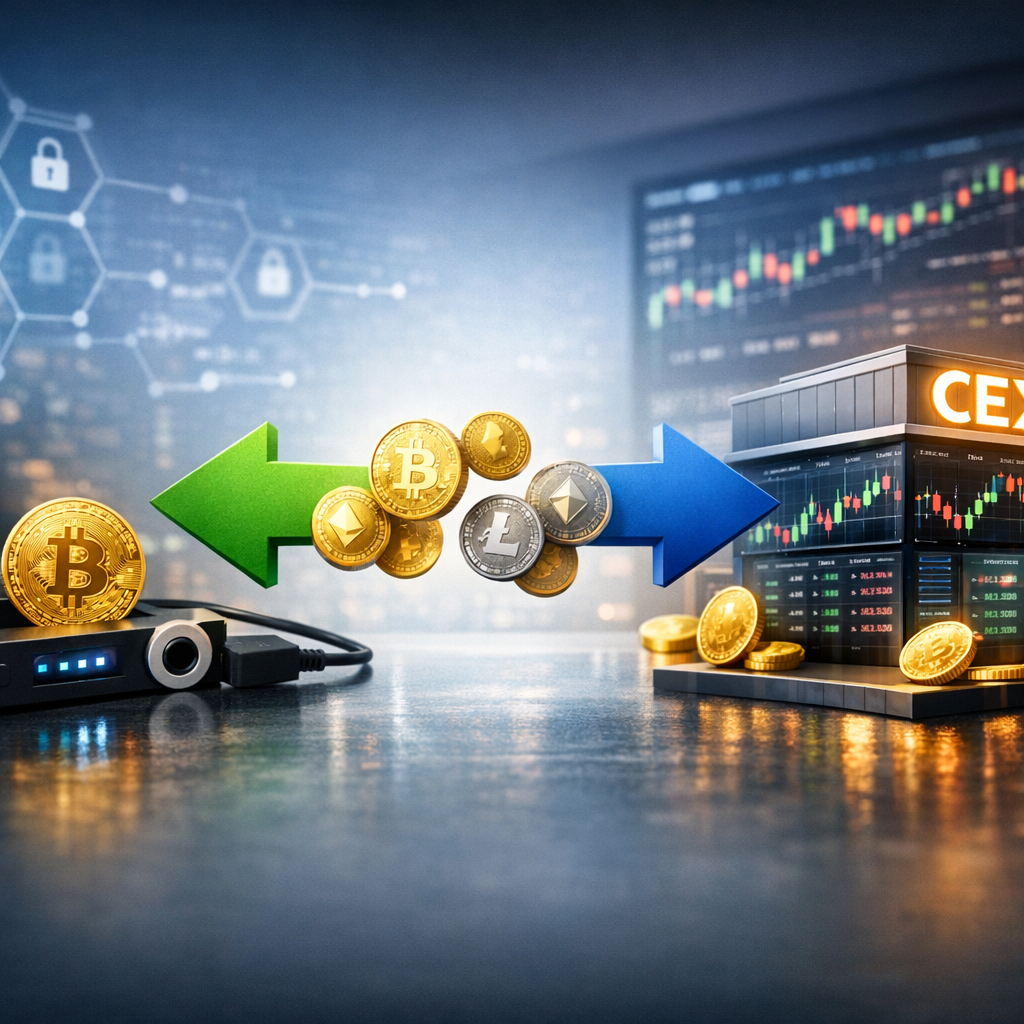
To make sense of the situation, it helps to understand how centralized exchanges and personal wallets operate. Binance, like most major exchanges, acts as a custodian when you store crypto on the platform. That means they technically control the private keys to your funds. In contrast, a cold wallet—such as a hardware wallet—puts you in full control of your private keys, significantly reducing the risk of hacks or platform failures.
Many long-term investors adopt a hybrid approach: using exchanges for buying and occasional trading, while storing the majority of funds in a cold wallet. This method is widely considered best practice in the crypto space. The phrase “not your keys, not your coins” reflects the reality that funds on exchanges are exposed to counterparty risk.
A useful visual aid here would be a simple diagram comparing exchange custody versus cold wallet custody, showing control over private keys and associated risks.
Why Transactions Sometimes Get Flagged
Why Moving Crypto Can Trigger Compliance Checks
Your concern about funds being flagged for money laundering isn’t baseless—but it’s often misunderstood. Exchanges like Binance are required to follow Anti-Money Laundering (AML) and Know Your Customer (KYC) regulations. These systems monitor transaction patterns, wallet addresses, and behavior to detect suspicious activity.
However, transferring funds between your own wallets—such as from Binance to a cold wallet and back—is not inherently suspicious. In fact, it’s a common and legitimate practice. What can trigger scrutiny are patterns such as:
Large, sudden transactions that don’t match your history.
Interactions with wallets linked to illicit activity (even unknowingly).
Frequent movement of funds through multiple wallets in a short time.
Using services that obscure transaction trails, such as mixers.
In your case, where you DCA over time and trade infrequently, your behavior appears relatively low-risk from a compliance standpoint. Returning funds from a personal wallet after a few months is unlikely to raise concerns—provided the funds have not interacted with suspicious addresses.
A chart or infographic showing “high-risk vs low-risk transaction behaviors” could be helpful in this section.
Regional Factors and Real-World Risk Levels
The Impact of Living in a Country Without Clear Crypto Laws
Your situation is slightly more nuanced because you live in a country without established crypto regulations. While this might seem like a grey area, it doesn’t necessarily increase your risk with Binance. Large exchanges operate under global compliance frameworks and often apply consistent standards regardless of a user’s location.
That said, using Binance P2P with bank transfers introduces an additional layer of complexity. P2P transactions involve dealing with other individuals, and while Binance provides escrow services, the origin of funds can sometimes be less transparent. This doesn’t mean it’s unsafe—but it does mean you should be cautious about who you transact with.
For example, if a P2P counterparty is later linked to fraudulent activity, transactions connected to that account could be reviewed. While this is relatively rare, it’s one reason why maintaining clean and traceable transaction history is important.
A step-by-step diagram of a typical P2P transaction flow could help clarify how funds move between parties and where risks may arise.
How Likely Is Your Crypto to Be Flagged?
In practical terms, the likelihood of your funds being flagged simply for moving between Binance and a cold wallet is low. Millions of users follow this exact pattern. Exchanges expect users to withdraw and deposit funds—it’s part of normal usage.
Where users run into trouble is usually due to factors unrelated to cold storage, such as:
Receiving funds from unknown or unverified sources.
Engaging in high-frequency trading patterns that resemble laundering.
Failing to complete KYC requirements when prompted.
If your funds originate from your own purchases and remain within your control, your risk is minimal. Think of it this way: transparency and consistency are your strongest protections.
A simple table comparing “common myths vs reality” about crypto transfers could enhance understanding here.
Best Practices for Safe and Smooth Crypto Management
Tips and Practical Advice for Staying Safe
If you want to use a cold wallet while minimizing any chance of issues, a few practical habits can go a long way. First, keep clear records of your transactions. Even a simple spreadsheet noting dates, amounts, and wallet addresses can be useful if questions arise later.
Second, avoid interacting with unknown wallets or services that promise anonymity. These often carry higher compliance risks. Stick to well-known platforms and your own wallets.
Third, test transfers with small amounts before moving larger sums. This reduces both technical and psychological risk.
Fourth, maintain consistency in your activity. If you typically invest gradually and trade occasionally, there’s no need to suddenly move large amounts in unusual patterns.
Finally, ensure your Binance account is fully verified and up to date. Completing KYC reduces the likelihood of disruptions and makes resolving any issues much easier.
Where helpful, this section could include a checklist-style infographic summarizing best practices for crypto transfers.
Conclusion
Moving your crypto between Binance and a cold wallet is not only safe but widely recommended for long-term security. While concerns about compliance and account freezes are understandable, they are often overstated when it comes to normal, transparent user behavior.
Your current strategy—gradual accumulation, infrequent trading, and considering cold storage—is aligned with best practices in the crypto space. By maintaining clear records, avoiding risky interactions, and staying consistent in your activity, you can confidently manage your assets without unnecessary fear.
Ultimately, the goal is balance: securing your crypto while staying within the bounds of exchange policies. With the right approach, you can achieve both.
References and Further Reading
For more information, consider exploring Binance’s official compliance and AML policy pages, as well as educational resources from organizations like Chainalysis and CoinDesk. You may also find value in hardware wallet guides from Ledger or Trezor, which explain best practices for self-custody. Academic and industry reports on crypto regulation can provide additional context, especially if laws begin to develop in your country.
Staying informed is one of the most powerful tools you have as a crypto investor.